The most memorable CSR programmes in Singapore do more than tick a box. They give teams real impact they can see, feel, and celebrate together.
That is why CSR trends are worth watching closely. Corporate social responsibility remains a strategic priority for organisations that care about community outcomes, employee engagement, and brand trust. What is evolving is how companies design those programmes: more hands-on, more purposeful, and more clearly tied to measurable results. Below, we unpack the CSR trends shaping corporate agendas, what they mean for corporate social responsibility in Singapore, and which CSR activities in Singapore turn purpose into a team experience people value.
CSR Today: What’s Changing (and What’s Enduring)
The 7th Annual CSR Insights Survey from the Association of Corporate Citizenship Professionals (ACCP) and YourCause from Blackbaud, covering 120 companies, found that 83% of CSR practitioners reported increased visibility inside their organisations. At the same time, 66% faced rising demand to measure impact, and 63% felt more pressure to make the business case for social programmes.
In other words, leadership wants clearer outcomes. Programmes that put employees into meaningful action tell a stronger story than announcements alone.
Singapore is also building stronger support for corporate volunteering. At the launch of VolunteerInc. (a Singapore Business Federation programme with the Ministry of Culture, Community and Youth), Acting Minister David Neo noted that SBF’s Social Sustainability Study found 90% of businesses believe social sustainability is important, while NVPC’s National Corporate Purpose & Impact Study found only about 30% of businesses were already giving back.
Purpose remains central. What is rising is the expectation that CSR programmes engage employees, create measurable outcomes, and feel worthwhile to take part in, not only worthwhile to announce.
Trend 1: Hands-On Impact Teams Can See and Celebrate
Hands-on contribution creates a different kind of energy in the room, and a clearer sense of shared achievement.
Across the ACCP survey, employee engagement budgets remained one of the most resilient programme areas: 30% of companies increased them, while only 12% cut them. Organisations are protecting programmes that connect people directly to impact.
This is also where corporate volunteering programmes are becoming more inventive. Teams want a shared experience: learn something meaningful, create something tangible, and leave with a story they can bring back into the organisation with pride.
Hands-on CSR delivers three practical advantages:
- Impact becomes tangible. Participants can see and hold what they created, and they leave knowing who it is for.
- Collaboration becomes purposeful. Teamwork is organised around a mission, not only an icebreaker.
- Communication becomes credible. Human moments and concrete outputs support stronger internal and external storytelling than a press release alone.
Trend 2: Purpose-Driven Team Experiences
Purpose is now a talent and culture signal, not only a brand statement.
In the same VolunteerInc. launch remarks, Acting Minister Neo cited findings that over 3 in 5 Singapore youths would not stay in jobs they do not find meaningful, and that nearly 9 in 10 Singapore Gen Z and Millennials in Deloitte’s Global 2024 Gen Z and Millennial Survey consider purpose important to job satisfaction.
That helps explain why purpose-led corporate social responsibility events continue to gain attention. When a team day connects clearly to organisational values (sustainability, education, community care), employees experience the “why” rather than hearing it as a slogan. The strongest programmes invite teams to practise those values.
If your organisation is strengthening the link between culture and contribution, explore Jambar’s Purpose & Impact outcomes, designed so team engagement and social good reinforce each other.
Trend 3: Local and Global Causes Teams Can Engage With
Another defining CSR trend is focusing on a particular cause. Companies are concentrating effort where impact is clearer and storytelling is stronger.
In the ACCP survey, top community priority areas included food insecurity (48%), K–12 education (47%), and workforce development (44%), with environmental sustainability cited by 43% of organisations as a priority area. The pattern is not support everything lightly. It is choose causes you can commit to, and go deeper.
For Singapore teams, that often means a deliberate blend:
- Local roots: community partners, neighbourhood needs, and national volunteering platforms such as VolunteerInc.
- Global reach: causes such as energy poverty, where a morning’s work in Singapore can support classrooms and households beyond our borders.
The strongest combination is a cause meaningful enough to inspire, and an activity concrete enough for every colleague to contribute, from early-career talent to senior sponsors.
Trend 4: Measurable Social Return, Designed Into the Day
Measurement expectations are rising. That does not mean a CSR team day needs to feel like an audit.
ACCP’s findings show a confidence gap: while measurement demand is high, only 13% of practitioners described themselves as “very confident” measuring impact and making the business case. That gap creates space for programmes that build outcomes into the design: clear deliverables, transparent partner logistics, and alignment with recognised frameworks such as the United Nations Sustainable Development Goals (SDGs) and social return on investment (SROI) thinking.
What teams and sponsors typically want to answer is straightforward:
- What did we make or enable today?
- Who benefits, and how?
- What happens after the session ends?
When those answers are built into the experience, reporting becomes clearer for leadership and more motivating for participants.
CSR Activities Singapore Teams Are Choosing
Looking for CSR activities in Singapore that match these trends? Prioritise experiences that are:
- Hands-on (make, build, pack, assemble)
- Inclusive across roles, seniority, and energy levels
- Practical indoors, so teams can run the session comfortably year-round
- Story-rich, so every participant leaves with a clear “I helped with…” outcome
- Partnered with credible NGOs or impact organisations
The formats gaining momentum are facilitated CSR team building programmes, where collaboration, learning, and hands-on contribution share the same agenda.
Browse more options in Jambar’s team building activities, or explore two Solar Buddy experiences Singapore teams use to turn sustainability commitments into tangible contribution.
Solar Buddy: The Hour of Power
Solar Buddy The Hour of Power is a hands-on CSR/ESG programme about energy poverty and sustainability, delivered in partnership with SolarBuddy.
Participants learn how energy poverty affects education, health, the environment, and livelihoods. They then move from insight to action. In a focused session (often around 30 minutes to an hour within a programme window of up to three hours), colleagues assemble solar lights and write personal letters that travel with those lights to children and communities living with energy poverty.

The format is indoor-friendly, works for groups from about 10 to 500 people, and suits mixed teams. The outcome is immediate and concrete: the group does not only discuss sustainability. They build something that will be used.
If you want a purpose-led session your team will remember for the right reasons, ask us about Solar Buddy The Hour of Power for your next corporate day.
Solar Buddy: Bright Futures
Solar Buddy Bright Futures builds on the same spirit with a richer kit and a broader “gift of light.”
Aligned with the United Nations Sustainable Development Goals, the session opens with a clear presentation on energy poverty. Each participant then assembles a Bright Futures Bundle, a solar-powered kit that goes beyond a single lamp. It includes USB charging ports to keep essential devices powered, plus two solar head torches for hands-free light for studying, cooking, and evening chores. That combination helps bridge the digital divide by supporting access to learning, communication, and market information.
After assembly, participants write a personal letter to the community that will receive the bundle. Every completed kit is collected, quality-checked, and shipped internationally through SolarBuddy’s in-country NGO partners, reaching children and families who need it most. Devices are designed to last over 15 years, which is one reason the programme emphasises genuine, measurable social impact (SROI), not a one-day photo moment.
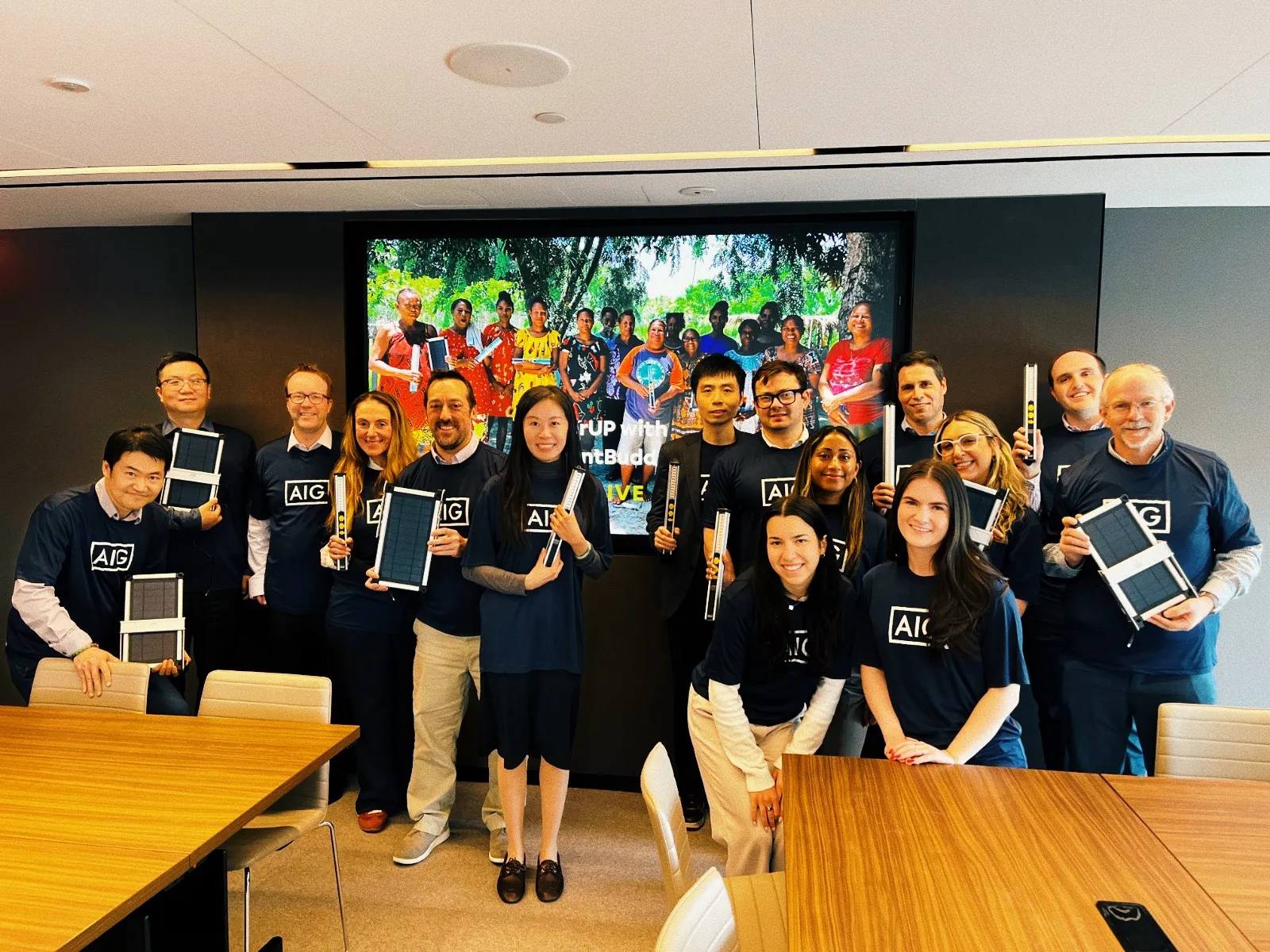
Like Hour of Power, Bright Futures is indoor, physical-device delivery, suitable for roughly 10 to 500 participants, and designed for all ages and genders.
For CSR initiatives with lasting impact and lasting stories, explore Solar Buddy Bright Futures.
Ready to turn CSR trends into a team day that delivers?
If you want CSR activities in Singapore that feel purposeful, practical, and engaging, with real global impact, Solar Buddy’s Hour of Power and Bright Futures are a strong place to start.
Share your group size, venue, and the outcome you care about most. We will help you design a CSR team building experience your people will talk about for the right reasons.